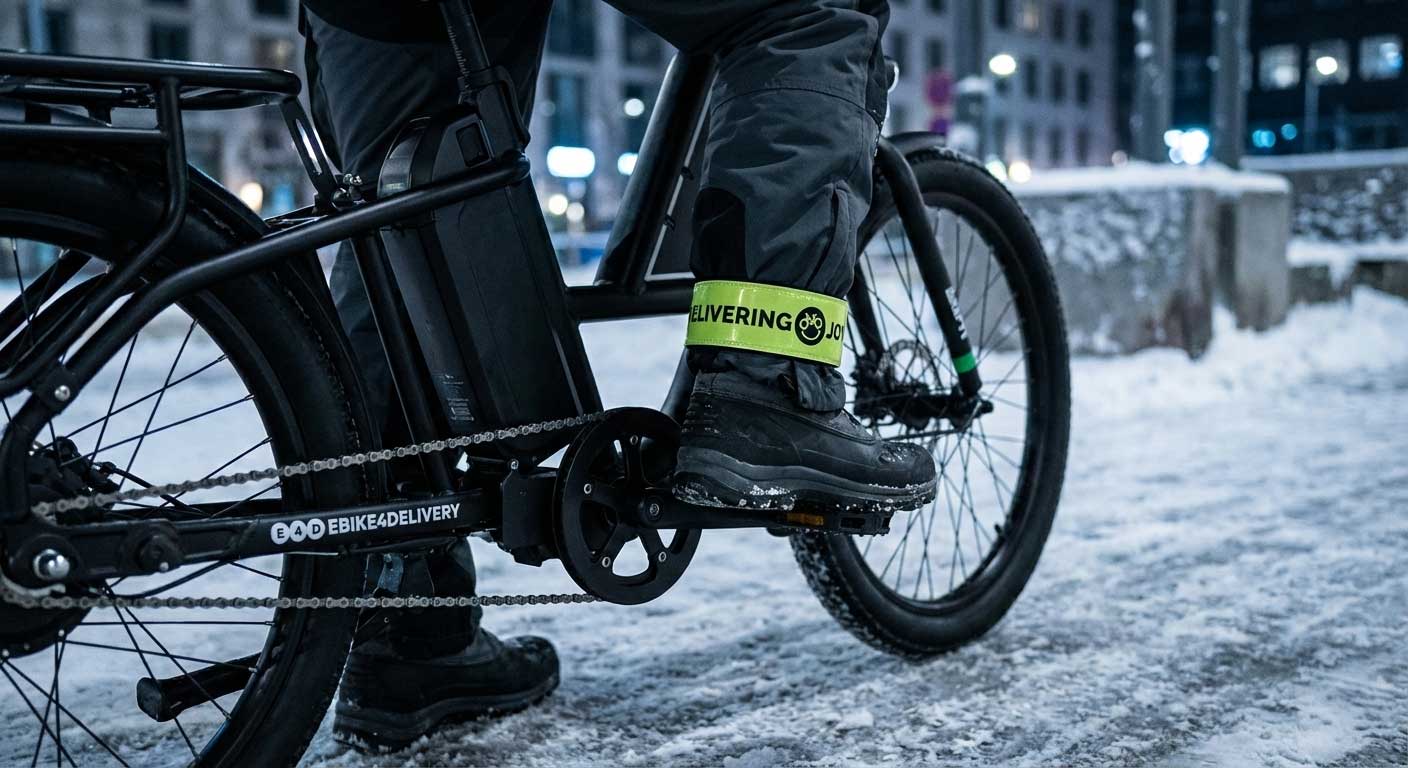
Staying Safe and Visible During Night Deliveries
Light up night deliveries safely. Use proven gear, reflectors, and lighting setups. Build rider awareness that saves lives. Dive into practical steps and ride secure.
Night deliveries are essential for last-mile logistics in European cities. Riders, fleet managers, and restaurant or Q-commerce operators should focus on safety and visibility to keep things running smoothly after dark.
Wearing the right gear, using reflectors and good lighting, managing batteries well, and staying alert all help reduce accidents, keep deliveries on schedule, and make fleets more reliable.
Why night delivery safety matters for e‑bike fleets
At night, it is harder to see, temperatures are lower, roads may be wet, and traffic can be more challenging. These factors all increase the risk of accidents.
For B2B fleet operators, night safety directly impacts:
- Operational uptime
- Repair and maintenance costs
- Rider confidence and retention
- On‑time delivery performance
Better visibility and regular safety routines help keep riders safe and make sure the business runs smoothly.
Essential gear for night deliveries
The right equipment is key for safe and efficient night work. When everyone in the fleet uses the same visibility gear, it reduces accidents, lowers downtime, and keeps performance steady during busy periods.
High-visibility clothing and reflectors
- Reflective jackets or vests with 360° visibility
- Reflective strips on pants and delivery backpacks
- Helmet reflectors
- Wheel and pedal reflectors
Reflective surfaces make riders visible from all directions, especially at intersections where accidents happen more often.
Proper gloves for cold and wet conditions
Gloves are not just for comfort. Insulated and waterproof gloves improve grip, braking, and throttle control. Cold hands can slow reaction times, which is a real safety risk at night.
Weather-resistant outer layers
Wearing windproof and waterproof layers helps prevent fatigue from the cold. Staying warm keeps riders focused and less likely to take risks.
Lighting: the most important visibility factor
Lighting is the most important part of night delivery safety. Reflective gear helps, but active lighting makes sure drivers and pedestrians see riders right away.
Reduced visibility at night makes it harder to see and react quickly. According to the European Commission’s European Road Safety Observatory, driving at night is riskier than during the day because hazards are detected more slowly.
Front light recommendations
- Minimum 300–500 lumens for urban riding
- Wide beam pattern for peripheral visibility
- Steady mode for dark streets
Rear light setup
- Bright red LED light
- Blinking mode in high-traffic areas
- Mounted at driver's eye level when possible
Side visibility matters
Many collisions happen from the side. Using reflective tire strips, spoke reflectors, and frame decals can greatly improve side visibility.
Cold weather battery management for consistent night deliveries
Good battery performance is essential for reliable night deliveries. Cold weather, long routes, and frequent stops can lower the battery’s range and power.
E-bike batteries lose capacity in cold weather. According to Bikeleasing.de, lithium-ion batteries can become less efficient near or below freezing (0°C), which affects range and riding consistency.
Source: Bikeleasing.de – Hibernation Tips for E-Bike Batteries
While e-bikes have lower energy consumption than electric cars, lithium-ion cells perform less well in cold conditions: reduced chemical activity inside the battery can lead to temporary performance loss.
Best Practices for Battery Performance in Winter
- Store batteries indoors at room temperature before deployment
- Avoid leaving batteries exposed to freezing conditions overnight
- Fully charge batteries before evening shifts
- Plan routes conservatively when temperatures drop below 5°C (41°F)
For fleets operating extended night routes, high-capacity systems like the Gen3 E-Bike Battery provide stable performance across demanding delivery cycles. For longer routes or high-intensity operations, the 20FIFTY M Battery can help reduce mid-shift swaps and improve operational continuity.
Battery performance in cold conditions is only one part of the equation. Modern lithium-ion systems integrate advanced battery management technology designed to improve thermal stability, extend cycle life, and enhance operational safety in high-usage delivery environments.
Understanding how battery technology continues to evolve — and how structured lifecycle management and refurbishment processes extend usable lifespan — is essential for long-term fleet sustainability. In an upcoming guide on E-Bike Battery Technology & Lifecycle Management, we will explore this topic in depth.
Rider awareness and safe riding techniques
Visibility equipment and lighting reduce risk, but rider behavior remains the most decisive safety factor during night deliveries. Awareness, anticipation, and controlled riding techniques significantly lower accident probability, especially in dense European urban environments. For fleet operators, structured riding standards and defensive habits are essential to maintaining consistent delivery performance after dark.
Defensive riding at night
- Assume drivers may not see you
- Avoid riding in blind spots
- Use clear hand signals
- Slow down at intersections
Adjust speed to road conditions
Wet pavement, leaves, and painted road markings become slippery at night. Slightly reducing speed improves braking distance and reaction time.
Extra precautions for cold-weather deliveries
- Check tire pressure (cold air reduces PSI)
- Inspect brakes before each shift
- Ensure sufficient tire tread depth
- Increase following distance
European safety guidance highlights that winter tires maintain flexibility at lower temperatures, improving grip and reducing stopping distance, a principle relevant for delivery bikes operating in cold and wet conditions.
Cleaning the bike after the shift
Road salt, moisture, and debris accelerate wear. After night shifts:
- Wipe down frame and drivetrain
- Dry electrical connection points
- Lubricate the chain if exposed to rain
- Inspect brake pads for contamination
Routine cleaning reduces long-term repair costs and extends component lifespan.
Building a safe night delivery routine
The safest fleets implement structured pre-ride inspections and standardized safety requirements. A consistent routine ensures every rider starts their shift fully visible and mechanically prepared.
Safety is not only about equipment — it is about discipline, visibility standards, and maintenance consistency.
Frequently Asked Questions
How bright should my e-bike light be for night deliveries?
A front light between 300 and 500 lumens is recommended for urban environments. Higher output improves visibility on poorly lit streets.
Does cold weather affect e-bike battery range?
Yes. Cold temperatures reduce battery efficiency and available range. Keep batteries warm before use and plan routes conservatively.
What is the most important safety gear for night riding?
High-visibility clothing combined with powerful front and rear lights provides the greatest safety improvement.
How can fleet managers reduce the risks of winter deliveries?
Standardize safety equipment, enforce inspection routines, maintain battery handling protocols, and implement defensive riding training.
Should bikes be cleaned after every night shift?
If operating in wet or salty conditions, yes. Cleaning prevents corrosion and reduces long-term maintenance costs.


